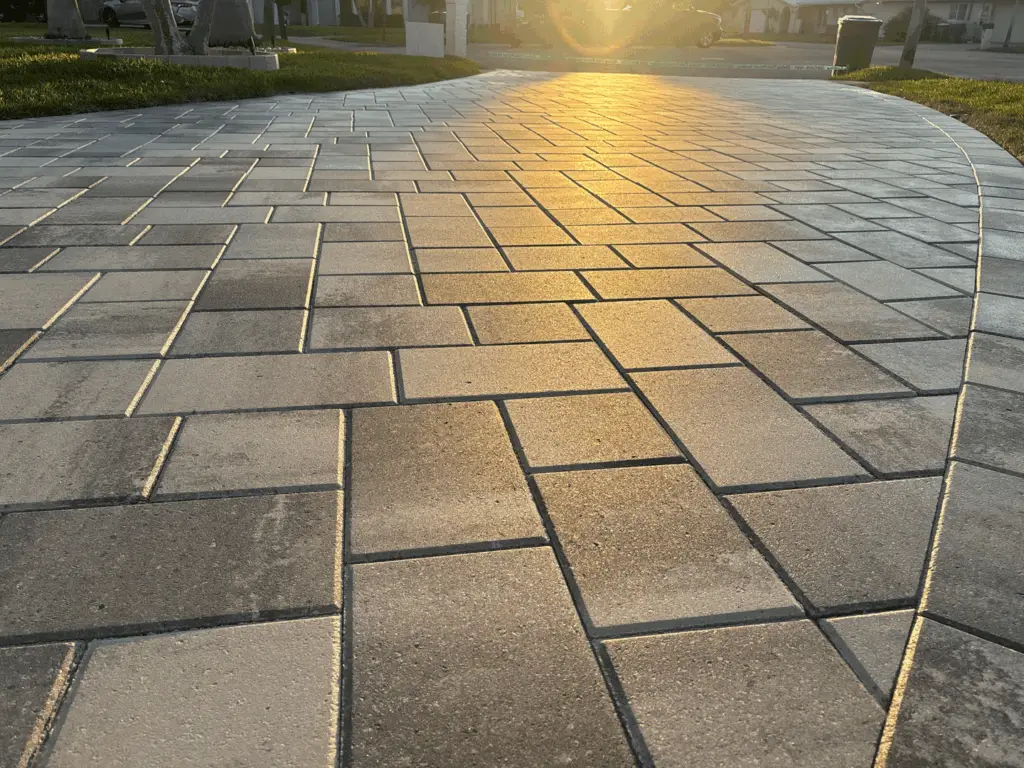
Sealed pavers need less work than most people expect: sweep and rinse them regularly, clean up spills quickly, keep sprinklers and standing water off them, keep the joints full of sand, and reseal every 2 to 3 years. Most damage to a good sealer comes from one of two extremes, neglect or overly aggressive cleaning. Here is a simple routine that works on the Space Coast.
Routine Cleaning: A Broom and a Hose
For everyday care, you do not need special equipment. The paver maker Mutual Materials recommends a stiff-bristle broom and a garden hose to scrub and clean pavers. On very dirty, high-traffic spots, add a little detergent to the water, scrub with a push broom and rinse.
Sweep often enough that leaves, sand and debris do not sit on the surface, especially after storms. Wet leaves and organic debris left in place can stain, and anything that holds moisture against the pavers gives mold a head start.
One tool to leave in the garage: steel-bristle brushes. The Interlocking Concrete Pavement Institute (ICPI) warns that steel bristles loosen from the brush, rust and leave stains. Brass or plastic bristles are fine.
What about the pressure washer? Sealed pavers need a gentler approach than bare pavers, or you can strip the sealer and wash out the joint sand. We cover how to do it safely in our guide to pressure washing sealed pavers, so we will not repeat it here.
Deal With Spills Quickly
Mutual Materials notes that cleaning and sealing pavers makes stains easier to remove because sealers keep stains from soaking into the surface. That works best when you act fast.
- Oil and grease: Mutual Materials says to treat stains as soon as possible, since the longer they sit, the deeper they go. Wipe off the excess, apply liquid detergent, let it soak for several minutes, then wash with hot water. Stubborn stains may need several rounds or a cleaner made for oil on concrete pavers.
- Grills: A mat under the grill catches grease drips before they reach the pavers.
- Drinks, food and sunscreen: Rinse them off the same day before the sun bakes them in.
- Any cleaner: Follow the label, and test it on a small spot you cannot easily see before using it on the whole area.
Watch the Sprinklers
If your irrigation runs on well water, check where the spray lands. The EPA lists 0.3 mg/L as the secondary standard for iron in water and notes that above that level, water can cause reddish or orange staining. Sprinklers that hit pavers with iron-rich water day after day are a common cause of orange rust marks on driveways and walkways.
Adjusting or replacing the heads so they water the lawn instead of the pavers is the best prevention. Rust stains that are already set in generally need a cleaner made for rust. Oil and rust stains are part of what our deep cleaning removes during paver restoration.
Mold, Mildew and Shady Spots
Mold and mildew grow where two things meet: moisture, such as water pooling on the pavers with dirt collecting in the same spot, and low light, in areas that stay shaded or rarely see sun.
Our wet season makes this worse. The National Weather Service office in Melbourne puts its median start at May 28 and the start of the dry season at October 17. Once the rains ease up in the fall, walk your pavers and look at the shady sides of the house, the areas under trees, and any low spots where water sits.
- Keep debris swept off shaded areas so it is not holding moisture.
- Trim back plants that keep a section in constant shade, where practical.
- Fix gutters or downspouts that dump water across the pavers.
- Clean growth early, before it gets established.
Keep the Joints Full
Joint sand locks the pavers together. Mutual Materials notes that normal traffic works dirt into the top of the joints, which helps hold the sand in place, but pavers exposed to driving winds or runoff can lose sand. Small losses can be refilled with dry sand, and sealer helps hold the sand in the joints.
Weeds are a joint problem, too. According to Mutual Materials, weeds between pavers grow from windblown seeds lodged in the joints, not from the bedding sand, base or soil below. Sealers can keep those seeds from germinating and help keep ants out. Pull weeds early, and be careful with weed killers near the lawn and garden beds.
If you are seeing a lot of empty joints, shifting pavers or sand washing onto the surface, that calls for joint sand replacement. Our post on paver sanding in Brevard County explains the process.
Furniture and Everyday Wear
- Put pads or glides under furniture legs, and lift chairs and tables instead of dragging them.
- Move planters now and then. Pots and saucers trap water and can leave rings.
- Keep fertilizer and fuel cans off the pavers.
When It Is Time to Reseal
For most Brevard County homes, we recommend resealing every 2 to 3 years. ICPI says the right reapplication period depends on use, climate and the quality of the sealer, and Mutual Materials notes that sealers may need to be reapplied from time to time due to wear and weather. Pavers in full sun, near the salt air or around a pool tend toward the shorter end.
Signs it may be time: the color looks dull or washed out again, spills soak in faster than they used to, and the surface is harder to keep clean. Our post on the signs your pavers need sealing goes through them in more detail.
Resealing starts with a proper cleaning. ICPI says the surface must be completely dry, with at least 24 hours without moisture, before most sealers go on. That prep is part of every paver sealing job we do.
Rising Tide Paver Sealing is a veteran-owned company based in Palm Bay, serving Brevard County from Titusville down to Palm Bay and the beaches. Questions about caring for your sealed pavers, or ready for a reseal? Call (321) 549-4251 or request a free estimate.
Frequently Asked Questions
How do you clean sealed pavers?
Sweep them, then scrub with a stiff-bristle broom and rinse with a garden hose. On dirty, high-traffic areas, add a little detergent to the water, scrub and rinse. Avoid steel-bristle brushes, which can shed, rust and leave stains, and keep any pressure washing gentle so it does not strip the sealer or the joint sand.
How often should sealed pavers be resealed in Florida?
For most Brevard County homes, we recommend resealing every 2 to 3 years. Full sun, salt air, pool chemicals and heavy traffic wear sealer faster, so exposed or busy areas tend toward the shorter end of that window.
How do you get oil off sealed pavers?
Wipe up as much as you can right away, apply liquid detergent, let it soak for several minutes, then wash with hot water. Mutual Materials notes that stubborn stains may need several treatments or a cleaner made for oil stains on concrete pavers. The sooner you treat it, the less it soaks in.
What causes orange stains on pavers?
Often it is rust from irrigation water that is high in iron. The EPA notes that water with more than 0.3 mg/L of iron can cause reddish or orange staining. Adjusting sprinkler heads so they water the lawn instead of the pavers helps keep it from coming back.
Why are weeds growing between my sealed pavers?
Weeds sprout from windblown seeds that lodge in the joints, not from the sand or base underneath. Keeping the joints full of sand and the surface sealed helps, since sealers can keep seeds from germinating. Pull new weeds early, before their roots loosen the joint sand.
Sources
- Mutual Materials: Maintenance Guidelines for Concrete Paving Products
- Interlocking Concrete Pavement Institute (ICPI): Tech Spec 5, Cleaning, Sealing and Joint Sand Stabilization of Interlocking Concrete Pavement
- U.S. EPA: Secondary Drinking Water Standards, Guidance for Nuisance Chemicals
- National Weather Service Melbourne: Wet/Dry Season Onset