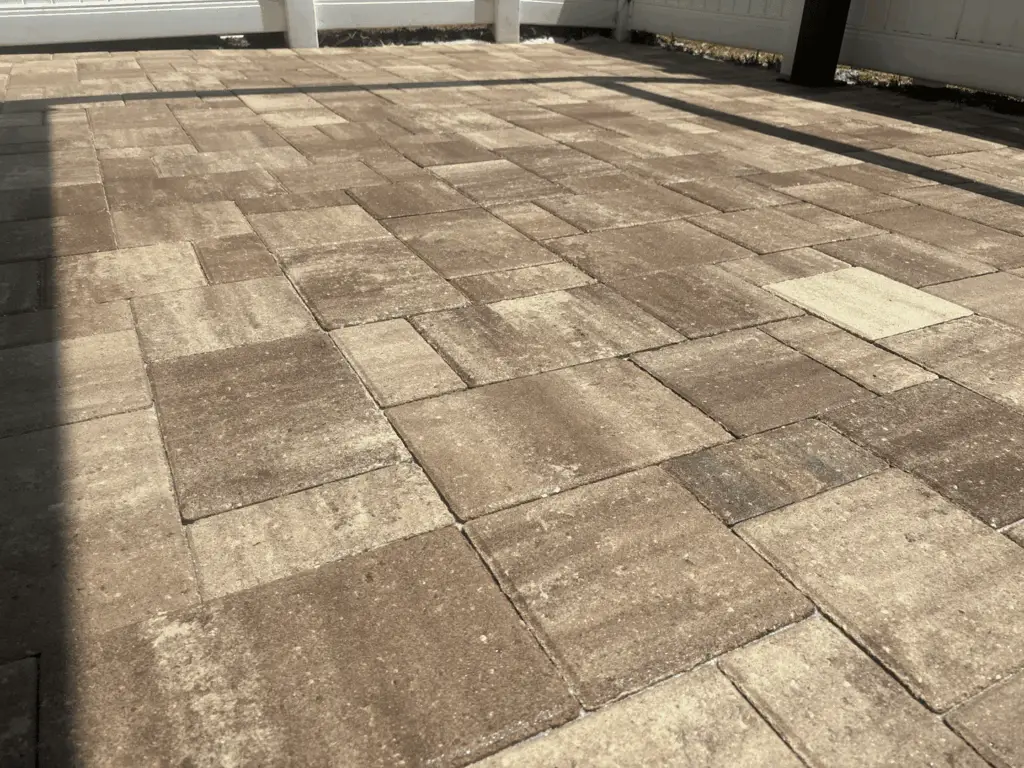
Paver sanding, also called re-sanding, means refilling the joints between your pavers with fresh joint sand. That sand is part of what locks the pavers together, so when it washes out, pavers can loosen, shift and sprout weeds. In Brevard County, joint sanding is usually done as part of a sealing or restoration job: after the pavers are cleaned and before the sealer goes on.
What Joint Sand Actually Does
A paver surface is a system. The pavers sit on a layer of bedding sand over a compacted base, and narrow joints between them are filled with sand. The Concrete Masonry & Hardscapes Association (CMHA), which now includes the Interlocking Concrete Pavement Institute (ICPI), describes joint sand as a key part of the interlock and stiffness of the whole surface. It is what makes all those individual pavers behave like one driveway.
Those joints are small. CMHA’s maintenance guide gives optimal paver spacing as about 1.5 to 3 mm, so it does not take much sand loss before the pavers have room to move.
It helps to know the difference between the two kinds of sand. Joint sand fills the gaps you can see. Bedding sand is the layer underneath the pavers. Re-sanding refills the joints. If the problem is below the pavers, such as a sunken area, that is a repair job that goes beyond sanding.
Why Joint Sand Washes Out
CMHA lists the usual culprits:
- Pressure washing, especially with a narrow nozzle aimed into the joints.
- Concentrated runoff, like water pouring off a roof or down a sloped driveway.
- Driving winds.
- Excessive cleaning.
- Saturated bedding sand that pumps under the weight of traffic, which mostly affects driveways.
Brevard County gives the rain plenty of chances. When the National Weather Service in Melbourne studied 22 years of data from a north Melbourne rain gauge, 64 percent of the rain fell in 38 percent of the year, during a wet season that averaged about 138 days. Heavy downpours running across pavers for months at a time will find any loose joint sand.
Cleaning technique matters too. ICPI’s cleaning guidance notes that a wide spray pattern held at a low angle reduces the risk of dislodging joint sand. Our post on pressure washing sealed pavers covers how to clean without stripping the joints.
Signs Your Pavers Need Re-Sanding
- The sand surface sits well below the top edge (the chamfer) of the pavers.
- Weeds or grass growing in the joints.
- Ant hills and loose sand piled on the surface.
- Pavers that rock or shift when you step on them.
- Joints that look wider in some areas than others. CMHA lists lack of joint sand as one cause of widening joints.
- Staining along the joints, which CMHA says can point to a saturated bedding layer underneath.
CMHA’s rule of thumb is simple: if the joint sand has dropped more than 1/2 inch, top it up right away. If you are also seeing sunken areas, missing pavers or heavy staining, a full paver restoration may be the better fit, since that covers repairs and base problems as well as sand and sealer.
How Re-Sanding Works
The basic method is not complicated. CMHA’s maintenance guide describes it this way: the paver surface must be dry, dry sand is spread back and forth with a wide push broom so it falls into the joints, the joints are filled to the bottom of the chamfer, and the extra sand is removed from the surface. Joints should be clear of weeds and debris before new sand goes in.
On our jobs, sanding comes after cleaning and any repairs. As our restoration page puts it, once the pavers are clean and dry, we replace the sand that has worked its way out of the joints over the years, because without joint sand, pavers shift, weeds take hold and water finds its way under the surface. Joint sanding is included in the price of our sealing work rather than billed as a surprise extra.
Why Sanding and Sealing Go Together
Sand and sealer each do part of the job. The sand fills the joints and keeps the pavers tight. The sealer protects the surface and helps the sand stay where it belongs.
ICPI explains that liquid sealer soaks into the joint sand during application, which gives the joints some added stability. Its application guidance calls for sealer to penetrate at least 3/4 inch into the joint sand. CMHA adds that sealers can help keep seeds from sprouting in the joints and keep ants from moving in. That only works if the joints are full when the sealer goes on, which is why sanding always comes first.
That is how our paver sealing service is set up: pressure cleaning, repairs, joint sanding to help keep weeds and insects out, and then the sealer. For most Brevard County homes, we recommend resealing every 2 to 3 years, and that is a good time to check the joints as well.
Keeping Your Joints Full Between Visits
- Sweep regularly. CMHA notes that fine dirt settling into the top of the joints actually helps hold the sand in place.
- If you pressure wash, use a wide spray at a low angle and keep the stream out of the joints.
- Pull weeds while they are small, before roots spread.
- Check the joints a couple of times a year. CMHA suggests inspecting during or right after a rain, when low spots and washouts are easiest to see.
- Fix small sand loss early, before pavers start to move. Our Florida paver maintenance guide covers the rest of the routine.
Rising Tide Paver Sealing is a veteran-owned company based in Palm Bay, serving Brevard County from Titusville down to Palm Bay and the beaches. If your joints are low or full of weeds, call (321) 549-4251 or request a free estimate and we will take a look.
Frequently Asked Questions
What is paver sanding?
Paver sanding, or re-sanding, means refilling the joints between pavers with fresh joint sand. That sand helps lock the pavers together, so replacing what has washed out keeps the surface tight and gives weeds and ants less room.
How do I know if my pavers need new joint sand?
Look at the joints. If the sand sits well below the top edge of the pavers, you see weeds or ant hills in the joints, or pavers rock when you step on them, the joints likely need sand. CMHA’s maintenance guide says to top up joint sand right away once it has dropped more than 1/2 inch.
Should pavers be sanded before or after sealing?
Before. The joints are filled with fresh joint sand first, and then the sealer goes on. Liquid sealer soaks into the joint sand as it is applied, which helps hold the sand in place.
Can I sweep new sand into my paver joints myself?
For a small top-up, yes. CMHA’s guide describes sweeping dry sand back and forth with a wide push broom over a dry surface until the joints are full, then removing the extra. It will not fix sunken or rocking pavers, which need the pavers lifted and the base corrected.
Why are weeds growing between my pavers?
Most weeds between pavers start from windblown seeds that land in the joints, not from the soil underneath. Low or empty joints give them more room, which is why full joints and a sealed surface help.
Sources
- Concrete Masonry & Hardscapes Association (formerly ICPI): Tech Note PAV-TEC-006-22, Operation and Maintenance Guide for Interlocking Concrete Pavement
- Interlocking Concrete Pavement Institute (ICPI): Tech Spec 5, Cleaning, Sealing and Joint Sand Stabilization of Interlocking Concrete Pavement (revised June 2004)
- National Weather Service Melbourne: Wet season rainfall statistics, north Melbourne station (1992-2013)