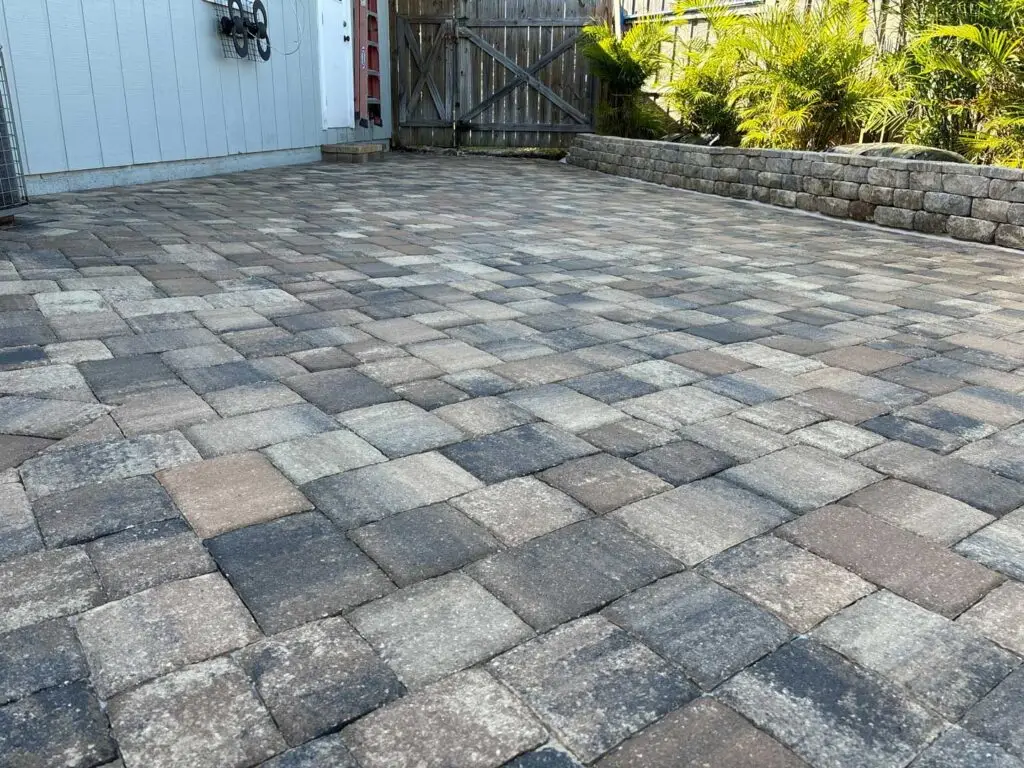
The clearest signs your pavers need to be sealed are faded color, weeds or ant hills in the joints, water soaking in instead of beading up, slick green or black growth, and not being able to remember the last time they were sealed. Any one of these is worth a closer look. Two or more usually means it is time. Here is what each one tells you, and why pavers in Brevard County tend to show them sooner.
1. The Color Looks Dull or Faded
Concrete pavers get their color from pigment mixed into the concrete. One paver maker explains that as the surface wears from traffic and weather, the cement and pigment slowly erode, and the color changes over time. The same guide says cleaning and sealing is one way to slow that change, and that sealers enhance the color and keep dirt from lodging in the surface.
One caution: a white, chalky film can make pavers look faded when they are not. That is often efflorescence, and it has to be cleaned off before sealing, not sealed over.
2. Weeds or Ant Hills Are Showing Up Between Pavers
Weeds between pavers do not grow up from the soil underneath. One manufacturer’s guide says they sprout from windblown seeds that lodge in the joints. The same guide says that besides stabilizing the joint sand, sealers can keep seeds from germinating and keep ants from getting in. If the sand has washed low, the joints need fresh joint sand before sealing.
3. Water Soaks In Instead of Beading
This is the easiest test. Splash water on a clean, dry section. If it beads or sits on top, the sealer is still working. If it soaks in and darkens the pavers within seconds, there is little or no sealer left.
Water matters here more than in most places. When the National Weather Service in Melbourne studied 22 years of rainfall at a north Melbourne gauge, 64 percent of the rain fell during the wet season, which ran about four and a half months. Unprotected pavers soak up a lot of that, and water carries dirt, stains and growth in with it.
4. Slippery Algae or Mold Is Forming
Green or black film shows up first where water sits and sunlight does not reach: shaded walkways, the north side of the house, around pool decks. Standing water collects dirt, and shade keeps it from drying. Besides looking bad, it can make the surface slick. Heavy growth needs a deep cleaning, which is part of our paver restoration process, before sealing makes sense.
5. You Cannot Remember the Last Time They Were Sealed
If it has been more than 2 to 3 years, or you have never sealed them, it is time to check. One paver manufacturer says sealer applied after installation generally needs to be re-applied after two or three years. We explain what affects that range in how long paver sealant lasts.
Signs That Point to More Than Sealing
Some problems are not fixed by a coat of sealer alone:
- Sunken, uneven or broken pavers. These need repair first so the surface is stable and level.
- Heavy staining. Oil, rust and deep organic stains need treatment before sealing, or the sealer locks them in.
- Old sealer that is cloudy, peeling or flaking. The failed sealer has to be stripped off before a new coat will bond and look right.
When several of these show up together, a full restoration usually makes more sense than sealing by itself. It covers repairs, deep cleaning, joint sand, and then sealing.
Why Brevard County Pavers Need Attention Sooner
Between strong sun, a long wet season, high humidity and salt air near the beaches and the lagoon, pavers on the Space Coast work hard. That is why homeowners from Titusville to Palm Bay see these signs on a 2- to 3-year cycle. Checking your pavers once in a while, especially before and after the rainy months, makes the decision easy.
Not sure what your pavers need? Rising Tide Paver Sealing is a veteran-owned company based in Palm Bay, serving Brevard County from Titusville down to Palm Bay and the beaches. We will look at the surface and tell you whether it needs sealing, a deeper restoration, or nothing yet. Call (321) 549-4251 or request a free estimate.
Frequently Asked Questions
How can I tell if my pavers are sealed?
Splash some water on a clean, dry section. On pavers with sealer in good shape, the water beads up or sits on the surface. If it soaks in and darkens the pavers within seconds, the sealer is worn or was never applied.
Is it bad to never seal pavers?
Pavers do not need sealer to stay structurally sound, and at least one paver manufacturer says so plainly. Sealing is about protection and looks. It helps hold joint sand in place, keeps stains from soaking in, and slows the color change that comes from wear and weather.
How often should pavers be sealed in Brevard County?
Every 2 to 3 years for most homes here. Driveways in full sun and pool decks that stay wet tend toward the 2-year end, while shaded, lightly used patios tend toward 3 years.
Can you seal pavers that have weeds in the joints?
Not as they are. The weeds and dirt need to come out, the pavers need a full cleaning, and the joints need fresh joint sand before any sealer goes on. Sealer applied over a dirty surface locks the dirt in.
Does a white haze mean my pavers need sealing?
Not always. On new or unsealed pavers, a white haze is usually efflorescence, which has to be removed before sealing. On pavers that were already sealed, a cloudy haze often means moisture is trapped under the sealer, which calls for stripping rather than another coat.
Sources
- Mutual Materials: Maintenance Guidelines for Concrete Paving Products
- Unilock: Paver Maintenance for Commercial Installations
- National Weather Service Melbourne: Wet season rainfall statistics, north Melbourne station
- Interlocking Concrete Pavement Institute (ICPI): Tech Spec 5, Cleaning, Sealing and Joint Sand Stabilization of Interlocking Concrete Pavement