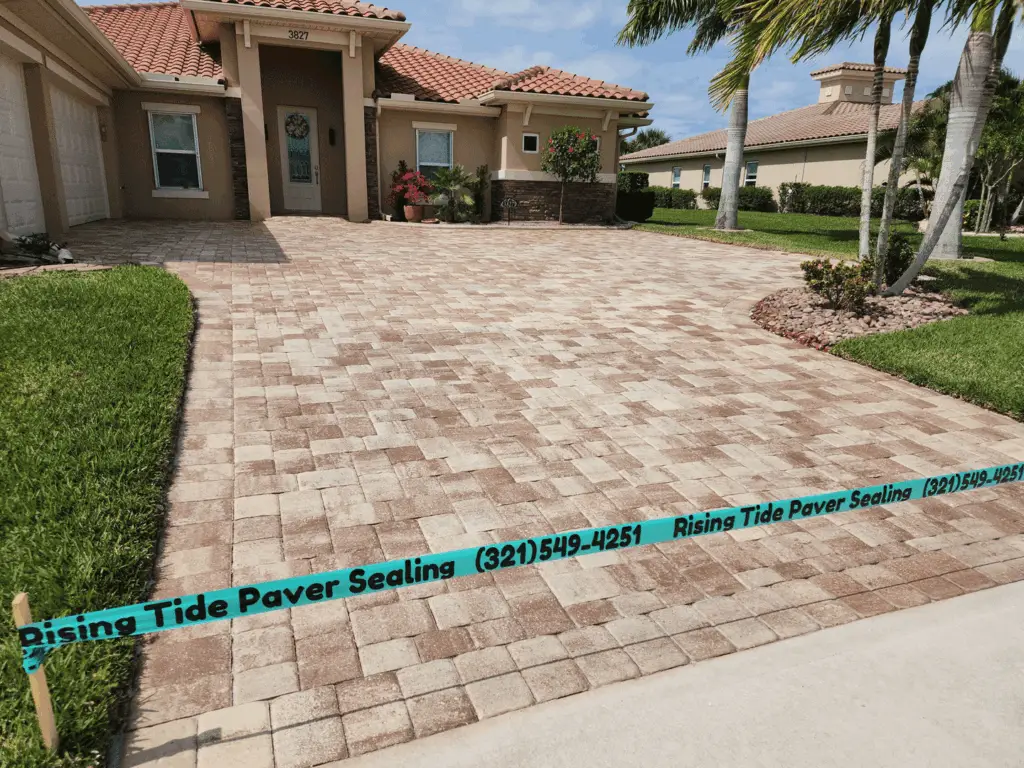
A professional paver sealing job follows the same basic order every time: assess, clean, repair, refill the joint sand, let everything dry, seal, and let the sealer cure. How long that takes depends on the size of the area, its condition and the weather. The step that sets the pace is drying. The pavers have to be completely dry before sealer goes on, and the sealer has to dry before anyone walks or drives on it.
Step 1: The Free Estimate
It starts with someone looking at your pavers in person. Our estimates are based on surface area, condition and sealer type. The visit is also where repair needs get spotted, drainage gets a look, and you talk through options such as a matte or glossy finish, or a tinted sealer for sun-faded pavers.
It helps to point out anything you have noticed:
- Stains that will not wash out, such as oil or rust
- Sunken, cracked or loose pavers
- Old sealer that is peeling, flaking or turning white
- Spots where water stands after rain or irrigation
Step 2: Scheduling Around the Weather
On the Space Coast, rain decides a lot of sealing dates. The National Weather Service office in Melbourne puts the median start of the local wet season at May 28 and the start of the dry season at October 17. When NWS Melbourne looked at 22 years of data from a north Melbourne rain gauge, 64 percent of the rain fell during the wet season, which ran about four and a half months. Melbourne sees measurable rain on 100 to 105 days in an average year.
None of that means summer jobs are off the table. It means a professional crew will usually watch the forecast closely and move a date if rain would hit pavers that need to dry or sealer that has just gone down. A rescheduled day is better than a cloudy finish.
Step 3: Getting Your Property Ready
A little prep on your end saves time on the day of the job:
- Turn off the sprinklers. ICPI recommends turning off all automatic sprinkler systems during cleaning, sealing and drying. Leave them off until you are told the sealer is dry.
- Clear the area. Move cars, patio furniture, grills, planters and anything else sitting on the pavers.
- Plan around pets and kids. They need to stay off the area while it is being cleaned, sealed and while it dries.
- Make sure there is water access. Professional cleaning uses a lot of water. ICPI describes professional pressure washers running at 6 to 12 gallons a minute, and that plenty of water matters more for rinsing than high pressure.
Step 4: Deep Cleaning
Cleaning is the biggest part of the job. A thorough pressure cleaning removes dirt, mold, mildew and other organic growth, and stubborn problems such as efflorescence, oil and rust stains get treated along the way. ICPI recommends removing specific stains first, then cleaning the whole surface, and using a wide spray at a low angle so sand is not blasted out of the joints. Our post on pressure washing pavers before sealing goes deeper on this step.
If old sealer is failing, it has to come off before anything else. Paver stripping adds its own step at the front of the job: strip the old sealer, clean the pavers, re-sand the joints, then apply new sealer.
Step 5: Repairs and Joint Sand
Sealer protects whatever is underneath it, so problems get fixed first. Sunken areas are leveled, and cracked or damaged pavers are addressed so the surface is smooth and stable.
Once the pavers are clean and dry, fresh joint sand goes back into the joints. Without it, pavers shift, weeds take hold, and water finds its way under the surface. We explain why this step matters in our guide to paver sanding.
Step 6: Drying Before Sealing
This is the step people do not expect, and the one that matters most for the finish. ICPI says all dirt, oil stains and efflorescence must be removed and the cleaned surface must be completely dry before most sealers are applied, with at least 24 hours without moisture or surface dampness.
If the pavers or joints are still damp, ICPI warns, the pavers can draw efflorescence up to the surface, or the sealer itself can turn white. That drying requirement is why cleaning and sealing are not always done on the same day, especially after a deep clean.
Step 7: Applying the Sealer
With the surface clean, repaired, sanded and dry, the sealer goes on. We apply it with professional equipment so the coverage is even. ICPI notes that wind should be calm for sprayed applications, so it does not blow sealer onto other surfaces or leave an uneven coat. It also warns against over-applying, which can leave the surface slippery once it cures. You can read more about the service itself on our paver sealing page.
Step 8: Cure Time and Getting Your Pavers Back
After sealing, the area needs time to dry before it is used again. ICPI says to prevent all traffic until the sealer is completely dry, typically 24 hours, and notes that drying time for water-based sealers varies with temperature, wind and humidity.
Different sealers have different cure times for foot traffic, furniture and vehicles, so follow the timing your crew gives you for each. The same goes for turning the sprinklers back on.
From there, the job is yours to look after. Our guide to maintaining sealed pavers in Florida covers the simple routine that keeps the sealer working, and we recommend resealing every 2 to 3 years.
How Long the Whole Process Takes
There is no single answer. A small patio in good shape is a much shorter job than a large driveway that needs stripping, repairs and fresh joint sand, and drying time and a summer forecast can stretch either one. Ask for a timeline for your property at the estimate.
Rising Tide Paver Sealing is a veteran-owned company based in Palm Bay, serving Brevard County from Titusville down to Palm Bay and the beaches. Call (321) 549-4251 or request a free estimate to get started.
Frequently Asked Questions
How long does paver sealing take?
It depends on the size of the area, how much cleaning, repair and joint sand work it needs, and the weather. The pavers have to be completely dry before sealing, which ICPI puts at at least 24 hours without moisture or surface dampness, so a job can be spread over more than one visit. Your estimate is the best place to get a timeline for your property.
How long after sealing pavers can you walk on them?
ICPI says to keep all traffic off until the sealer is completely dry, typically 24 hours. Drying time varies with the sealer, temperature, wind and humidity, so follow the timing your contractor gives you for foot traffic, furniture and vehicles.
How do I prepare for paver sealing?
Turn off automatic sprinklers that hit the pavers, and leave them off until you are told the sealer is dry. Move cars, furniture, grills and planters off the area, keep pets and kids off it, and point out any stains, sunken spots or old peeling sealer to the crew.
Can pavers be sealed during the rainy season?
Yes, as long as there is a dry window. In Melbourne, the wet season typically runs from late May to mid-October. The pavers have to be dry before sealing and the sealer needs time to dry before rain, so summer jobs depend on the forecast and sometimes get moved.
Why do pavers need to be dry before sealing?
Sealer applied over damp pavers or wet joint sand can turn white or cloudy, and moisture can pull efflorescence up under the new coat. That is why ICPI calls for the cleaned surface to be completely dry, with at least 24 hours without moisture, before most sealers go on.