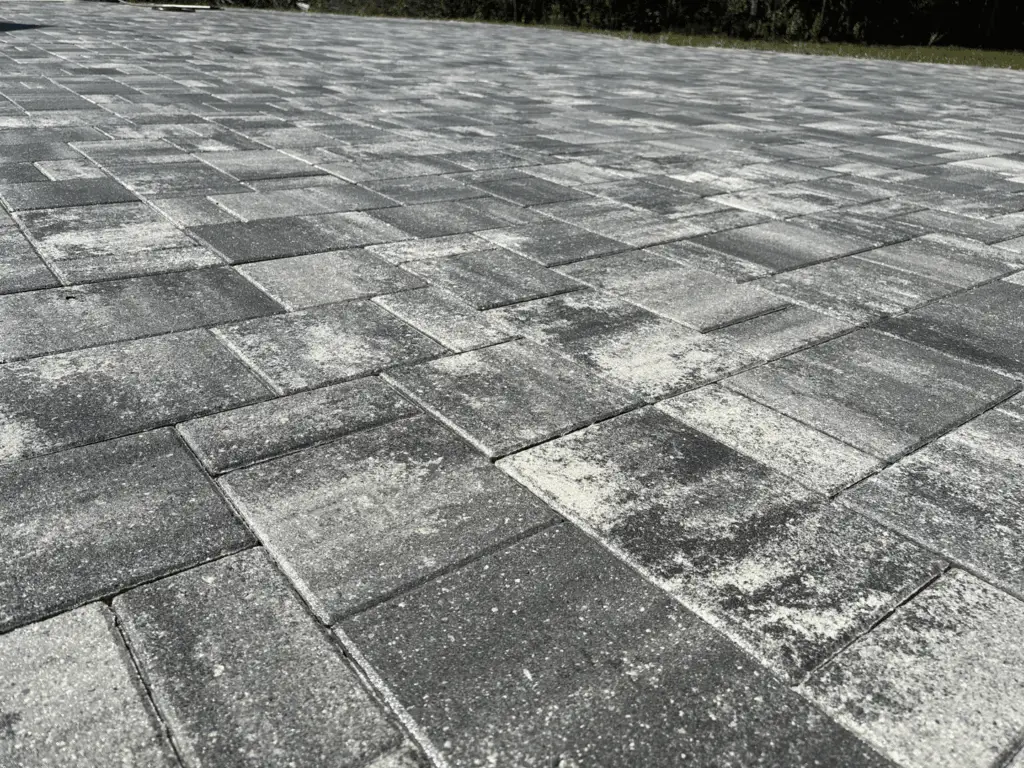
Yes, you can pressure wash sealed pavers. Use low pressure, a wide fan spray held at a low angle, and keep the wand moving. The sealer is what takes the wear on your driveway or patio, and the same force that blasts away dirt can also wear the sealer down and wash sand out of the joints. Done gently, a sealed surface actually cleans up faster than a bare one.
Sealed Pavers Are Built to Be Cleaned
Easier cleaning is one of the reasons to seal in the first place. One paver manufacturer’s maintenance guide says sealed pavers are generally easier to keep clean than unsealed ones, and another notes that sealers keep stains from soaking into the surface and keep dirt from lodging in it. Dirt sits on top, so it does not take much force to lift it off.
The catch is that a pressure washer cannot tell dirt from sealer. Turn it up too high, get the tip too close, or use a pinpoint or rotating turbo tip, and you can wear the sealer thin in stripes, scar the face of the pavers, and blow sand out of the joints. The first manufacturer’s guide goes as far as saying that after a deep cleaning with a pressure washer and stain removers, sealer that was applied after installation may need to be reapplied.
How to Pressure Wash Sealed Pavers Without Stripping the Sealer
- Start with the least pressure that works. The Interlocking Concrete Pavement Institute (ICPI) puts professional paver cleaning at 600 to 2,000 psi. A sealed surface that only needs a refresh belongs at the gentle end. Turn it up only if dirt is not coming off.
- Use a wide fan spray. ICPI notes that a nozzle with a wide spray covers more ground and keeps sand from being washed out of the joints. Leave the pinpoint and turbo tips in the box. They pack all the force into a tiny spot.
- Keep the angle low. Spray across the surface, not straight down. One manufacturer recommends an angle no greater than 30 degrees across the surface to keep from disturbing the joint material, and ICPI says a low angle from a wide spray lowers the risk of knocking sand loose.
- Keep the wand moving. Holding the spray in one place is how stripes and bare patches happen. Work in overlapping passes and follow the slope, so dirty water runs off the area you have not cleaned yet.
- Let the water do the work. ICPI makes the point for rinsing: a large amount of water matters more than high pressure.
- Test first. Try your setup on a corner nobody looks at before you start on the front walk.
Pre-Treat Stains Instead of Turning Up the Pressure
When a spot will not come clean, the temptation is to move the tip closer. Treat the stain instead and let the cleaner do the work. One paver maker says stain removers often work best when they soak into the stain for 5 to 10 minutes before being washed off, and that a second application may be needed.
- Use cleaners made for concrete pavers, and follow the label.
- Test any cleaner on a small, out-of-the-way spot first, as ICPI recommends.
- Scrub with a brass or plastic bristle brush. ICPI warns that steel bristles break off, rust and leave stains.
- Wipe up oil as soon as you see it. The longer it sits, the deeper it goes.
- Keep runoff off your lawn and plants, and do not let cleaner sit in low spots, where ICPI says it can stain the pavers. Turn off the sprinklers while you work.
Most of the Time You Do Not Need a Pressure Washer
For routine upkeep, a garden hose, a paver cleaner and a stiff brush handle most dirt on sealed pavers. ICPI notes that small areas such as residential patios, walks and small driveways can be cleaned well by applying cleaner by hand, scrubbing, and rinsing thoroughly with a garden hose. Sweeping or blowing off leaves and sand between washes keeps grit from grinding into the surface.
Save the pressure washer for the jobs that need it, like mildew building up in a shaded corner, or the deep clean that comes before resealing.
When Not to Pressure Wash Sealed Pavers
- Right after sealing. ICPI says to keep all traffic off until the sealer is completely dry, typically 24 hours. A pressure washer is much harder on the surface than feet, so check the sealer label or ask whoever applied it how long to wait.
- When the sealer is already failing. A white, cloudy haze, peeling or flaking means the sealer has broken down. Blasting it leaves a patchy mess. That is a job for paver stripping, not a harder wash.
- When the joints are already low. If the sand sits well below the paver edges, the spray will pull out more. Plan on refilling the joint sand afterward.
- When pavers are cracked or loose. Fix those first. Water driven under a loose paver can wash out the sand that holds it in place.
Signs Your Sealer Is Worn Out
Pressure washing cleans a sealer. It cannot bring one back. If you notice these, the surface probably needs resealing rather than another wash:
- Water soaks in and darkens the pavers right away instead of beading on top.
- The color looks flat and pale even when the pavers are clean and dry.
- Stains soak in faster than they used to.
- Joint sand washes out easily and weeds keep coming back.
- It has been 2 to 3 years since the last coat.
That last one matches what paver makers publish: one manufacturer says a sealer applied after installation generally needs to be re-applied after two or three years. More on that in how long paver sealant lasts.
After You Wash
Let the pavers dry, then look them over. One manufacturer’s cleaning steps end with checking the joint material and replacing it as needed, so sweep fresh joint sand into any joints the spray left low. Look for lighter or patchy spots too. Those may be places where the sealer wore thin.
If you are getting ready to reseal, the bar is higher. ICPI says all dirt, oil stains and efflorescence must be removed before sealing, and the pavers must be completely dry, with at least 24 hours without moisture. That deep clean is its own job, and we walk through it in cleaning pavers with a pressure washer before sealing.
Doing It Yourself or Calling a Pro
A gentle rinse of a sealed patio is a fine weekend job. For bigger cleanings, ICPI’s guide says most jobs should be handled by a professional company experienced with cleaners and spray equipment. It is worth a call if stains are heavy, the sealer looks hazy or is peeling, the joints keep washing out, or you are getting ready to reseal.
When we seal pavers, the work starts with pressure cleaning to remove dirt, mold and organic growth. Repairs come next, then joint sanding, and only then does the sealer go on.
Not sure whether your sealer can handle a wash, or think it is time for a new coat? Rising Tide Paver Sealing is a veteran-owned company based in Palm Bay, serving Brevard County from Titusville down to Palm Bay and the beaches. Call (321) 549-4251 or request a free estimate.
Frequently Asked Questions
Will pressure washing remove paver sealer?
It can. Too much pressure, a narrow or rotating tip, or holding the tip too close can wear sealer thin and leave stripes. A paver manufacturer’s maintenance guide notes that sealer applied after installation may need to be reapplied after a deep pressure-wash cleaning. Low pressure, a wide fan spray and a low angle keep that wear to a minimum.
What PSI should I use on sealed pavers?
Use the lowest pressure that gets the surface clean. ICPI’s cleaning guide puts professional paver cleaning at 600 to 2,000 psi, and a sealed surface that only needs a refresh rarely calls for the top of that range. A wide spray, a low angle and plenty of water matter as much as the number on the machine.
How long after sealing pavers can you pressure wash them?
Keep all traffic off until the sealer is completely dry, which ICPI says typically takes 24 hours. A pressure washer puts far more force on the surface than foot traffic, so check the sealer label or ask whoever applied it how long to wait before using one. In the meantime, a gentle rinse with a garden hose is enough for light dirt.
Do you need to re-sand pavers after pressure washing?
Often, yes. Pressure washing can pull sand out of the joints, especially with a narrow tip or a steep angle. Check the joints once the pavers dry and sweep fresh joint sand into any that sit low. Full joints hold the pavers together and leave less room for weeds.
Can pressure washing fix a cloudy or peeling sealer?
No. A white haze, peeling or flaking usually means the sealer itself has failed, often because moisture is trapped underneath it. Spraying it harder tends to leave a patchy finish. The old sealer has to be stripped off before the pavers can be cleaned and sealed again.