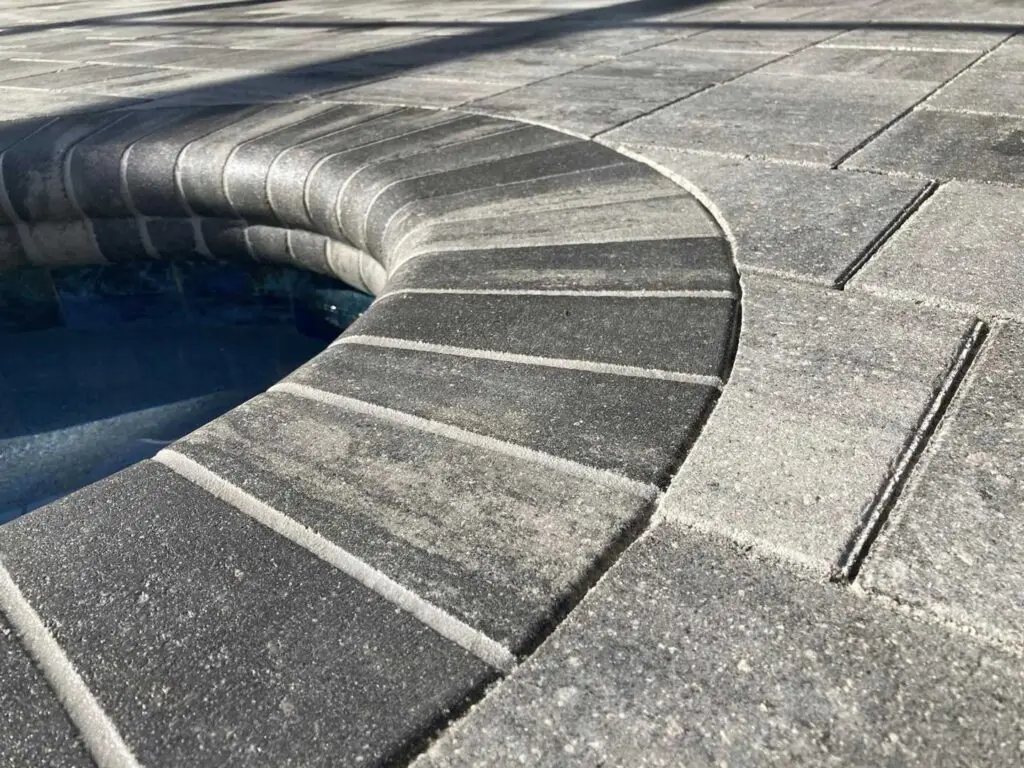
Paver sealing is the job of applying a liquid sealer to clean, dry pavers so it soaks in and forms a protective layer. That layer helps the pavers resist stains, oil and dirt, slows the worn, faded look that weather leaves behind, and helps hold the sand in the joints. Most sealers also deepen the paver color, and some add a glossy “wet look.”
That is the short answer. Below is what sealer does, what it does not do, and what a sealing job looks like from start to finish. If you want the longer version built around our local climate, read our guide to paver sealing in Brevard County.
What Sealer Does for Your Pavers
The Interlocking Concrete Pavement Institute (ICPI), the trade group for the concrete paver industry, describes sealers as an added layer of protection that cuts down how much water, stains, oils and dirt get into the paver surface. In everyday terms, that means:
- Stains clean up easier. Spilled oil, grease, food and drinks have a harder time soaking in.
- Color stays richer. Most sealers darken the pavers a little and bring out their color. Sealer does not make color permanent, but ICPI’s maintenance guidance says cleaning and sealing can slow the rate of color change.
- Joint sand stays put. Liquid sealer soaks a little way into the sand between the pavers as it goes on, which helps hold that sand in place.
- Fewer weeds and ants. ICPI notes that sealers can help keep seeds from sprouting in the joints and keep ants from moving in.
One detail surprises a lot of homeowners: weeds between pavers usually do not grow up from underneath. ICPI’s maintenance guide says they sprout from windblown seeds that land in the joints. Full joints with sealer worked into them leave those seeds less to grab onto.
What Sealer Does Not Do
Sealer is a protective coat, not a repair. It will not level a sunken spot, fix a cracked paver or replace sand that has already washed out. Those things get handled before any sealer goes on.
It also does not last forever. Sealers wear down with traffic and weather, and ICPI says how often they need to be reapplied depends on use, climate and the quality of the sealer.
And it does not cover up problems. If pavers are sealed while they are still dirty or damp, or over the white haze called efflorescence, the sealer can trap the problem underneath or turn cloudy itself. Our post on efflorescence on pavers explains that white haze and why it has to clear before sealing.
Why Pavers Get Sealed in Brevard County
Pavers here deal with strong sun, salt air near the beaches and the river, and a long rainy season. The National Weather Service office in Melbourne puts the average start of the wet season at May 28 and the start of the dry season at October 17. That is a lot of months of rain, mold and mildew for an unsealed driveway or pool deck, and a lot of water running through the joints.
How a Paver Sealing Job Works
A good sealing job is mostly preparation. Our paver sealing service runs in this order:
- Pressure cleaning to remove dirt, mold and other organic growth.
- Repairs to any loose or damaged pavers so the surface is smooth and stable.
- Joint sanding, refilling the joints with fresh joint sand to help keep weeds and insects out.
- Sealer, applied with professional equipment once the surface is clean and ready.
You also get a say in the finish. A matte finish keeps a natural look, and a glossy finish gives that deeper wet look. Pavers that already have old, peeling or hazy sealer on them usually need paver stripping first, so the new coat has a clean surface to bond to.
How Often to Reseal
For most Brevard County homes, we recommend resealing every 2 to 3 years. Full sun, pool chemicals and heavy driveway traffic push you toward the shorter end. Shaded, lightly used areas tend to land toward the longer end. Our post on how long paver sealant lasts goes into what wears a sealer down.
Is Sealing Worth It?
For most concrete paver driveways, patios and pool decks, sealing is simply routine upkeep, the way paint is for a house. It keeps the color looking good, makes everyday spills less of a worry, and helps keep the joints full so the pavers stay tight. The part that decides whether it works is the prep: clean pavers, full joints and a dry surface before the sealer goes on.
Rising Tide Paver Sealing is a veteran-owned company based in Palm Bay, serving Brevard County from Titusville down to Palm Bay and the beaches. If you would like an honest look at your own pavers, call (321) 549-4251 or request a free estimate.
Frequently Asked Questions
What is paver sealing?
Paver sealing is applying a liquid sealer to clean, dry pavers so it forms a protective layer. The sealer helps the surface resist stains, oil and dirt, helps hold the sand in the joints, and usually deepens the paver color.
Does sealing pavers make them last longer?
Sealing protects the surface, which helps pavers keep their color and shrug off stains, and it helps keep the joint sand in place so the pavers stay locked together. It does not fix damage that is already there, and the sealer itself wears and needs to be reapplied.
How often should pavers be sealed in Florida?
For most Brevard County homes, we recommend resealing every 2 to 3 years. Sun, pool chemicals and how much traffic the surface gets decide where in that window your pavers land.
Can you seal pavers right after pressure washing?
Not right away. ICPI says the cleaned surface must be completely dry, with at least 24 hours without moisture, before most sealers go on. Sealing damp pavers is one of the common reasons a sealer turns white or cloudy.
Does sealing pavers make them slippery?
It can if too much sealer goes on. ICPI warns against over-applying sealer so the surface does not turn slippery once it cures, which is one reason pool decks get extra attention to slip resistance.
Sources
- Interlocking Concrete Pavement Institute (ICPI): Tech Spec 5, Cleaning, Sealing and Joint Sand Stabilization of Interlocking Concrete Pavement (revised June 2004)
- Concrete Masonry & Hardscapes Association (formerly ICPI): Tech Note PAV-TEC-006-22, Operation and Maintenance Guide for Interlocking Concrete Pavement
- National Weather Service Melbourne: Wet/Dry Season Onset