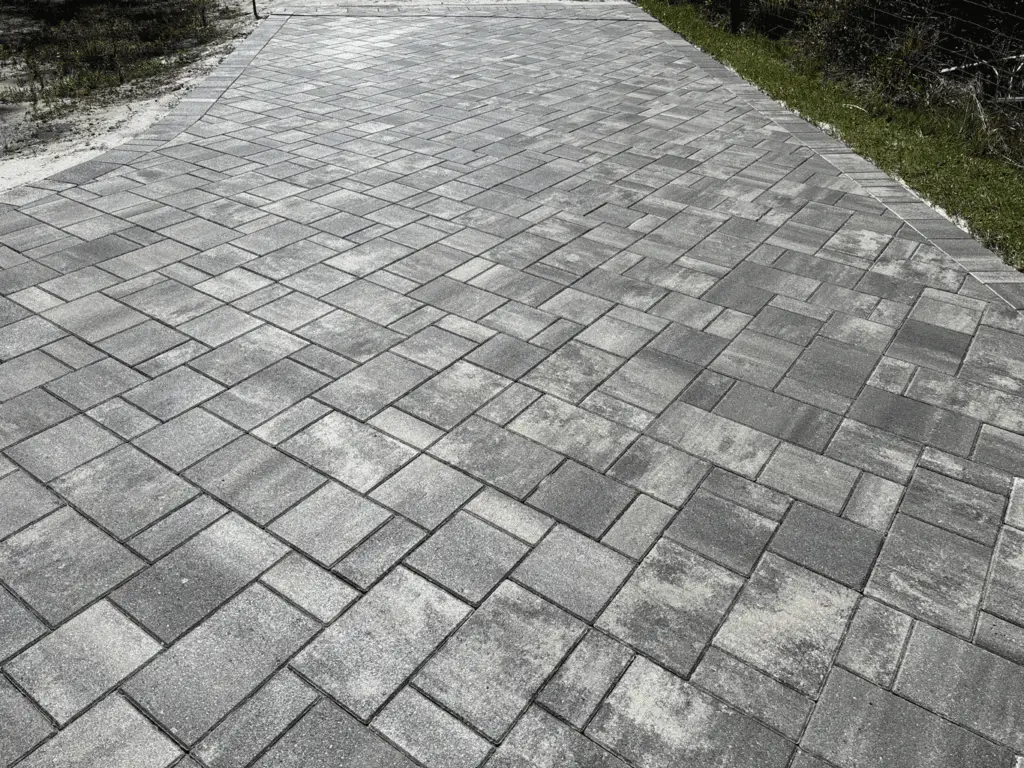
In Brevard County, plan on resealing pavers every 2 to 3 years. That lines up with what paver makers publish: one manufacturer’s maintenance guide says a sealer applied after installation generally needs to be re-applied after two or three years. Where your pavers land in that range depends on sun, water, traffic, the type of sealer, and how well the surface was prepared before it was sealed.
What Wears Paver Sealer Down
The Interlocking Concrete Pavement Institute (ICPI) says sealers normally need reapplication after a period of wear and weather, and that the timing depends on use, climate and the quality of the sealer. Here is how that plays out on the Space Coast.
- Sun. Strong Florida sun fades and breaks down outdoor finishes, and areas in full sun all day wear fastest.
- Water. We get a lot of rain in a short window. When the National Weather Service in Melbourne studied 22 years of rainfall at a north Melbourne gauge, 64 percent of the rain fell during the wet season, which ran about four and a half months. Add sprinklers, and a sealer here spends plenty of time wet.
- Traffic. Tires on a driveway wear sealer faster than bare feet on a patio. ICPI says the durability of acrylic sealers depends on traffic, among other things.
- Salt air. Homes near the beaches and the Indian River Lagoon deal with salt in the air on top of sun and rain.
- Prep. Sealer applied over dirt, efflorescence or damp pavers will not perform the way it should. ICPI says the surface has to be clean and completely dry, with at least 24 hours without moisture, before sealing.
Sealer Type Makes a Difference
Most homes get an acrylic sealer. ICPI describes acrylics as widely used on residential pavers, good at enhancing color and resisting stains, and generally lasting a few years before re-coating is needed. ICPI also says acrylics give longer protection from surface wear than penetrating silane and siloxane sealers.
Finish matters for looks more than lifespan. Some homeowners want a natural matte look, others want gloss. We cover the options for our climate in the best paver sealants for Brevard County.
Why More Sealer Is Not Better
It is tempting to reseal early, just to be safe. Paver makers warn against it. The same manufacturer guide says applying sealers too often will create a milky haze. Once a surface goes cloudy or starts to peel, another coat will not fix it. The old sealer usually has to come off through paver stripping before the pavers can be sealed again. That is why 2 to 3 years is the target, not every chance you get.
Signs It Is Time to Reseal
- Water soaks into the pavers instead of beading on top.
- The color looks dull or washed out even after a cleaning.
- Oil and rust stains soak in faster than they used to.
- Joint sand is washing out and weeds are showing up between pavers.
- Shaded spots are growing slick green or black film.
We go through each of these in the top 5 signs your pavers need to be sealed.
How to Get the Most Out of Your Sealer
- Sweep or blow off leaves, sand and debris regularly, so grit is not grinding into the surface.
- Clean up oil and spills quickly. The longer oil sits, the deeper it goes.
- Wash gently. A hose and a soft brush handle routine dirt, and if you use a pressure washer, keep it low and wide. Our guide to pressure washing sealed pavers covers the details.
- Keep the joints full. Refill joint sand where it has washed out.
- Aim sprinklers at the lawn, not across the driveway.
What a Reseal Involves
A reseal is not just a new coat on top of the old one. When we do paver sealing, the work starts with pressure cleaning to remove dirt, mold and organic growth. Any repairs come next, then joint sanding, and only after that preparation does the sealer go down. Our pricing includes that preparation work, so there are no surprise charges for it.
Not sure where your pavers are in the cycle? Rising Tide Paver Sealing is a veteran-owned company based in Palm Bay, serving Brevard County from Titusville down to Palm Bay and the beaches. Call (321) 549-4251 or request a free estimate and we will take a look.
Frequently Asked Questions
How often should pavers be resealed in Florida?
Every 2 to 3 years is the usual interval in Brevard County. Driveways in full sun, surfaces with daily car traffic and pool decks that stay wet tend toward the 2-year end. Shaded, lightly used patios tend toward 3 years.
Can you seal pavers too often?
Yes. A paver manufacturer’s maintenance guide warns that applying sealers too often will create a milky haze. A hazy, built-up finish usually has to be stripped off before the pavers can be sealed properly again, so more coats are not better.
How do I know if my paver sealer has worn off?
Wet the pavers with a hose. If water soaks in and darkens them right away instead of beading, the sealer is likely worn. Faded color, stains that soak in faster and joint sand that washes out easily are other signs.
Does the type of sealer change how long it lasts?
Yes. ICPI notes that acrylic sealers, which are widely used on homes, generally last a few years before they need re-coating, and that their durability depends on traffic, the quality of the acrylic and its solids content. ICPI also says acrylics give longer protection from surface wear than penetrating silane or siloxane sealers.
Do pavers need to be cleaned before resealing?
Yes. ICPI says all dirt, oil stains and efflorescence must be removed before sealing, and the pavers must be completely dry, with at least 24 hours without moisture. Sealer applied over dirt or damp pavers can lock in stains or turn white.
Sources
- Unilock: Paver Maintenance for Commercial Installations
- Interlocking Concrete Pavement Institute (ICPI): Tech Spec 5, Cleaning, Sealing and Joint Sand Stabilization of Interlocking Concrete Pavement
- Mutual Materials: Maintenance Guidelines for Concrete Paving Products
- National Weather Service Melbourne: Wet season rainfall statistics, north Melbourne station