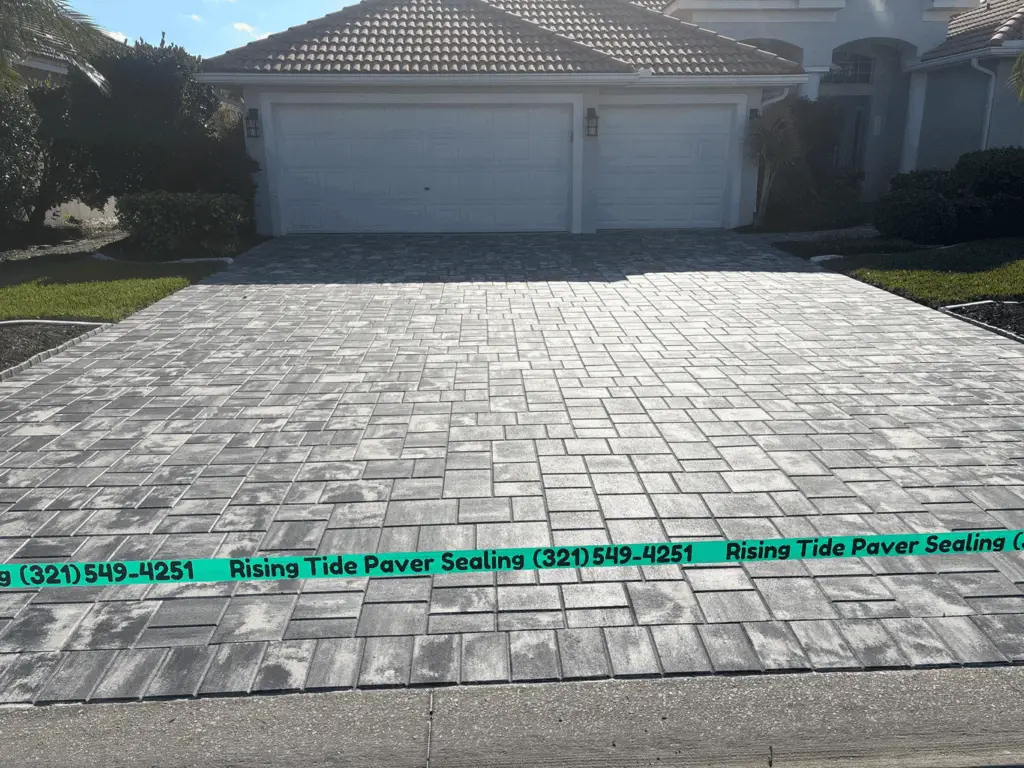
Paver sealing helps a Palm Bay home’s curb appeal in two ways. It brings back the color that sun, rain and wear wash out, and it helps the driveway and walkway stay that way, with fewer stains, fewer weeds and tidier joints. Since the driveway and front walk are among the first things anyone sees when they pull up, they set the tone for the whole house.
What Palm Bay Weather Does to Pavers
Rising Tide is based in Palm Bay, so we see the same things on driveways across the city:
- Sun. Strong Florida sun fades paver color, especially on driveways with no shade.
- Rain. Our rain comes in a concentrated season. When the National Weather Service in Melbourne studied 22 years of rainfall at a north Melbourne gauge, 64 percent of the rain fell during the wet season, which ran about four and a half months.
- Humidity and shade. Where water sits and sunlight does not reach, mold, mildew and algae move in and leave dark stains.
- Wear. One paver maker explains that as pavers wear from traffic and weather, the cement and pigment at the surface slowly erode and the color changes over time.
None of that ruins pavers overnight. It just slowly turns a sharp-looking driveway into a tired one.
What Sealing Does for Curb Appeal
- Richer color. Sealing brings out the natural color of the pavers, with a matte or glossy finish depending on the look you want.
- Fewer stains. A paver manufacturer’s guide notes that sealers keep stains from soaking into the surface and keep dirt from lodging in it. Oil drips and rust spots are easier to deal with.
- Tidier joints. The same guide says sealers help hold sand in the joints and can keep windblown seeds from sprouting and ants from moving in.
- Easier cleaning. Another manufacturer says sealed pavers are generally easier to keep clean than unsealed ones.
For pavers that are badly faded, a tinted sealer can often bring the color back to near the original without replacing a single paver.
Where It Shows Most
The driveway is the big one, since it is the largest surface facing the street and it takes car traffic, oil drips and tire marks. The front walk and entry are next, because guests see them up close. Out back, pool decks and coping take water, pool chemicals and sunscreen every day, and a sealed deck and coping simply look sharper. If you can only do one area now, start with what people see from the street.
Clean First, Then Seal
Sealer locks in whatever is on the surface, so the prep is where curb appeal is really won. Our paver sealing work starts with pressure cleaning to remove dirt, mold and organic growth. Repairs come next, then joint sanding, and only after that does the sealer go on.
If your pavers have sunken spots, heavy stains or old sealer that has gone cloudy, sealing alone will not fix the look. That calls for paver restoration: repairs, a deep cleaning, fresh joint sand, and then sealing.
Keeping That Look Over Time
Plan on resealing every 2 to 3 years. One paver manufacturer says sealer applied after installation generally needs to be re-applied after two or three years, and resealing too often can leave a milky haze. Our list of signs your pavers need to be sealed will tell you when you are getting close.
As for budget, our paver sealing cost guide puts the range at $1.85 to $5.00 per square foot. Estimates depend on surface area, condition and sealer type, and they include the prep work.
Paver Sealing in Palm Bay
Palm Bay is home base for us. You can learn more about our work around town on our Palm Bay paver sealing page. Rising Tide Paver Sealing is veteran-owned, 5-star rated on Google, and serves all of Brevard County, from Titusville down to Palm Bay and the beaches. Call (321) 549-4251 or request a free estimate.
Frequently Asked Questions
Does sealing pavers help a home’s curb appeal?
Yes. Sealing deepens the natural color of clean pavers, helps keep stains from soaking in, and helps hold sand in the joints so weeds have less room to grow. The driveway and front walk are some of the first things people see, so even color and tidy joints go a long way.
How often should pavers be sealed in Palm Bay?
Every 2 to 3 years for most Palm Bay homes. Driveways in full sun and pool decks that stay wet tend toward the 2-year end, while shaded, lightly used patios tend toward 3 years.
Can sealing bring back faded pavers?
Often, yes. A deep cleaning followed by sealing brings out the natural color, and you can choose a matte or glossy finish. For pavers that are badly sun-faded, a tinted sealer can often bring them back to near their original color without replacing them.
How much does paver sealing cost in Palm Bay?
Rising Tide’s pricing runs $1.85 to $5.00 per square foot. Where a job falls depends on the surface area, the condition of the pavers and the sealer type, and the price includes the preparation work: pressure cleaning, repairs and joint sanding. Estimates are free.
Do pavers need to be cleaned before they are sealed?
Yes. The Interlocking Concrete Pavement Institute (ICPI) says all dirt, oil stains and efflorescence must be removed before sealing, and the pavers must be completely dry, with at least 24 hours without moisture. Sealer applied over a dirty surface locks the dirt in, which is the opposite of what you want for curb appeal.
Sources
- National Weather Service Melbourne: Wet season rainfall statistics, north Melbourne station
- Mutual Materials: Maintenance Guidelines for Concrete Paving Products
- Unilock: Paver Maintenance for Commercial Installations
- Interlocking Concrete Pavement Institute (ICPI): Tech Spec 5, Cleaning, Sealing and Joint Sand Stabilization of Interlocking Concrete Pavement