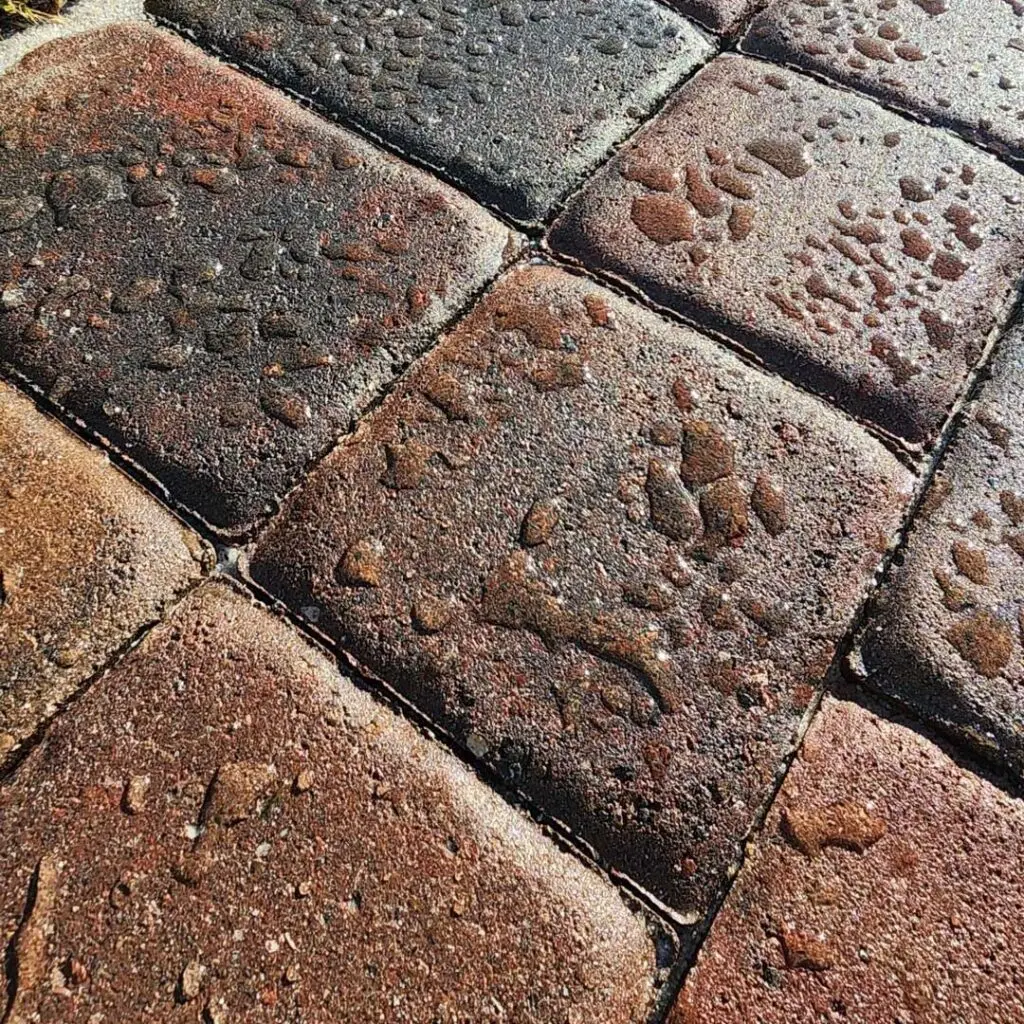
When people ask about the best paver sealants for Brevard County, the honest answer is that no single type is best for every home. The right type depends on the surface and the look you want. Acrylic sealers, water-based or solvent-based, are the common choice for driveways and patios and give the most color and gloss for the effort. Penetrating silane/siloxane sealers leave a flat, natural look and hold up well to salt air and pool chlorine. Urethanes give a hard, high-gloss finish that is difficult to remove later. Whatever the type, prep and application matter as much as the product.
Below we cover what our coastal climate asks of a sealer, how each type compares, and how to choose a finish. We describe sealer types in general terms and do not recommend specific brands.
What Coastal Brevard Asks of a Sealer
- Long, heavy rainy seasons. When the National Weather Service in Melbourne studied 22 years of data from a north Melbourne rain gauge, 64 percent of the rain fell in 38 percent of the year, during a wet season that averaged about 138 days. Water running across pavers that long tests both the sealer and the joint sand.
- Sun and weathering. Concrete pavers get their color from pigment held in cement. ICPI explains that wear from traffic and weather slowly erodes that surface and changes the color over time, and that cleaning and sealing can slow it down.
- Salt air. Homes near the beaches and the Indian River live with salt in the air. ICPI notes that silane and siloxane sealers give added protection to pavers exposed to salt air.
- Pool chemicals. Pool decks deal with chlorine every day, which narrows the list of good options.
- Moisture underneath. ICPI lists a sealer that does not let moisture escape as one of the reasons a sealer can turn white. In a wet climate, how well a sealer “breathes” matters.
The Main Types of Paver Sealer
ICPI’s sealing guidance groups paver sealers into a few families. Here is how they compare.
Water-based acrylic
Water-based sealers are emulsions: very small particles of sealer suspended in water. ICPI notes they do not penetrate as deeply as solvent-carried sealers, and they usually dry more slowly, with curing time that varies with temperature, wind and humidity. Most water-based sealers comply with VOC (volatile organic compound) rules, which makes them easier to work around.
Like all acrylics, they enhance paver color, add some gloss and give good stain resistance. ICPI says acrylics are widely used on homes, generally last a few years before recoating, and can be cleaned and resealed without harsh chemicals. Acrylics made specifically for concrete pavers do not yellow over time.
Solvent-based acrylic
Solvent-based sealers have the solids dissolved in a solvent, which carries them as deep as the solvent can soak into the paver. They offer the same color and stain benefits as other acrylics. The trade-offs: ICPI notes many solvent-based products are combustible and give off hazardous fumes, and VOC restrictions usually apply to them. In our experience on the paver stripping side, solvent-based sealers are also more prone to a hazy, cloudy look when they are applied incorrectly.
Penetrating silane/siloxane
Silanes and siloxanes soak into the paver and form a water-repellent barrier inside it, keeping moisture out while still letting the paver release water vapor. ICPI explains that this helps deter efflorescence, the white haze that can show up on concrete pavers. They initially enhance color and leave a flat, no-gloss finish, so the pavers keep a natural look.
They are a good match for salt air and, according to ICPI, useful around pool decks to limit damage from chlorine. One catch for driveways: ICPI says silanes and siloxanes do not resist petroleum stains unless they contain additives made for that purpose.
Urethane
Urethanes, solvent-based or water-based, give a high gloss, enhance color and are more resistant to chemicals than acrylics. In Florida sun, one detail matters: ICPI says aromatic urethanes should contain a UV inhibitor to reduce yellowing, and the label should state that the sealer is UV stable.
The bigger trade-off is the future. ICPI notes urethanes cannot be refreshed just by recoating, and removing them often takes harsh chemical strippers or sandblasting, work that is best left to professionals.
Quick Comparison
- Look: acrylics and urethanes add gloss and color; silane/siloxane stays flat and natural.
- Oil and stains: acrylics and urethanes resist stains well; silane/siloxane needs added stain-resisting ingredients for driveways.
- Salt air and pool chlorine: silane/siloxane is the type ICPI points to.
- Breathability: silane/siloxane lets moisture escape, which helps against white haze.
- Future upkeep: acrylics can be cleaned and recoated; urethanes cannot simply be recoated.
Choosing a Finish
ICPI describes three general looks. Some sealers add a glossy “wet look.” Others offer some color enhancement with a low sheen, often called satin. Others leave a flat, natural finish. Our paver sealing service offers both matte and glossy finishes, and the right pick depends on your pavers, the setting and your taste.
Pool decks need extra thought. Slip resistance and chlorine exposure both shape the choice, and ICPI warns that over-applying any sealer can leave the surface slippery once it cures. Our post on pool deck paver sealing goes into more detail. For pavers that have faded badly, a tinted sealer can bring back color, though in most cases we recommend sealer without tint unless the discoloration is severe.
Why Prep Matters More Than the Product
Even the right sealer fails on the wrong surface. ICPI says all dirt, oil stains and efflorescence must be removed before sealing, and the surface must be completely dry, with at least 24 hours without moisture. Sealer applied over saturated joint sand, or applied too thick, can turn cloudy, and then it has to be removed or re-dissolved.
What is already on your pavers matters too. If the old sealer is peeling, hazy or patchy, it has to come off through paver stripping before a new coat can bond. That is why we look at the existing surface first and then recommend the sealer type, finish and application method for your specific pavers.
How Long Sealers Last on the Space Coast
ICPI says sealers need reapplying after a period of wear and weather, and that the timing depends on use, climate and the quality of the sealer. For most Brevard County homes, we recommend resealing every 2 to 3 years. Our post on how long paver sealant lasts covers what shortens or stretches that window.
Rising Tide Paver Sealing is a veteran-owned company based in Palm Bay, serving Brevard County from Titusville down to Palm Bay and the beaches, including Satellite Beach. If you are not sure which sealer fits your pavers, call (321) 549-4251 or request a free estimate.
Frequently Asked Questions
What is the best paver sealer for Florida?
There is no single best type for every home. Acrylic sealers are the common choice for driveways and patios and give good color and stain resistance, penetrating silane/siloxane sealers give a flat, natural look and hold up well to salt air and pool chlorine, and urethanes give a hard, high-gloss finish. The right one depends on the surface, the look you want and what is already on the pavers.
Is water-based or solvent-based paver sealer better?
Each has trade-offs. Solvent-based sealers carry the sealer deeper into the paver, but many are combustible, give off strong fumes and can be more prone to hazing when applied incorrectly. Water-based sealers do not penetrate as deeply and dry more slowly, but most meet VOC rules and are easier to work around.
Which type of sealer is best for a pool deck?
ICPI notes that silane and siloxane sealers are useful around pool decks to limit damage from chlorine, and they leave a flat finish. Whatever the type, a pool deck needs attention to slip resistance, and ICPI warns that over-applying sealer can make a surface slippery once it cures.
How long does paver sealer last in Florida?
For most Brevard County homes, we recommend resealing every 2 to 3 years. ICPI says how often a sealer needs reapplying depends on use, climate and the quality of the sealer, so full sun, pool chemicals and heavy traffic push you toward the shorter end.
Can you put new sealer over old sealer?
Sometimes. ICPI says pavers sealed with acrylics can be cleaned and resealed, but urethanes cannot be refreshed just by recoating. If the old sealer is peeling, hazy or patchy, it has to be stripped before a new coat goes on.
Sources
- Interlocking Concrete Pavement Institute (ICPI): Tech Spec 5, Cleaning, Sealing and Joint Sand Stabilization of Interlocking Concrete Pavement (revised June 2004)
- National Weather Service Melbourne: Wet season rainfall statistics, north Melbourne station (1992-2013)
- Concrete Masonry & Hardscapes Association (formerly ICPI): Tech Note PAV-TEC-006-22, Operation and Maintenance Guide for Interlocking Concrete Pavement