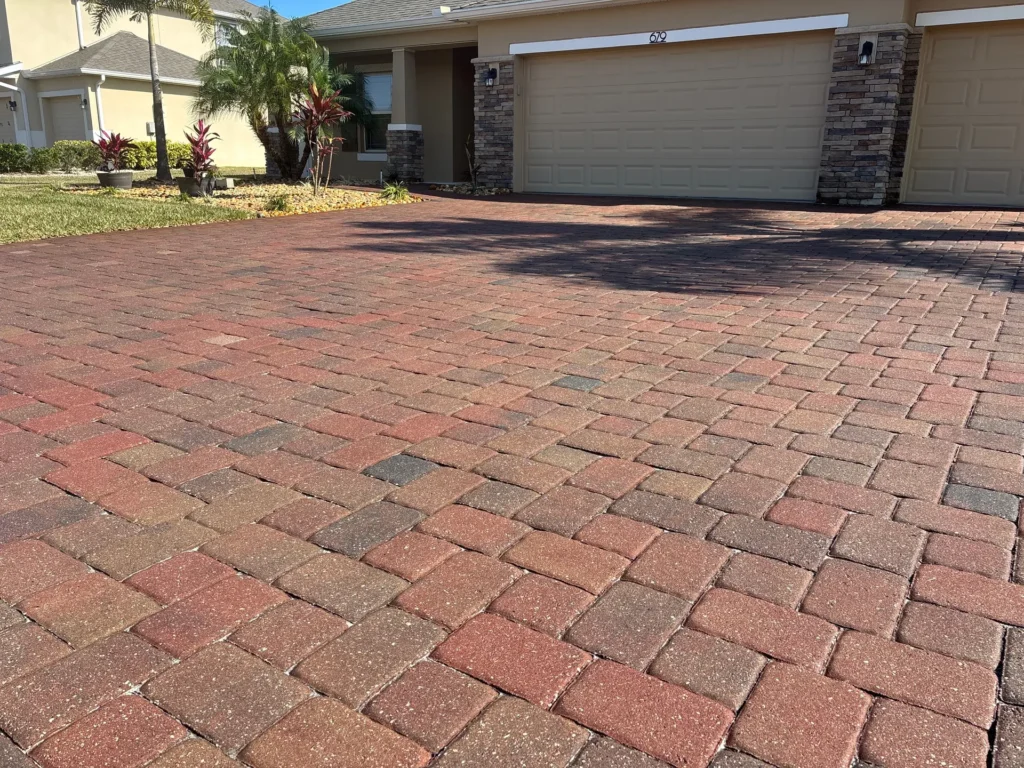
Brick paver sealing starts with a question most homeowners never get asked: are your “brick pavers” actually brick? On most Brevard County driveways, patios and pool decks, they are concrete pavers made to look like brick. True clay brick pavers are out there too, and the two do not need the same care. This guide covers how they differ, which one benefits from sealer, what finish to pick, and what to watch for so the job looks right for years.
Concrete Pavers vs Clay Brick: What You Probably Have
People use “brick pavers” for almost any interlocking paver, and that is fine in conversation. For sealing, the material matters.
Concrete pavers are the most common hardscape in newer Space Coast neighborhoods. They come in many shapes and colors, including tumbled and slate-look styles. Their color can fade over time in strong sun, which is a big part of why they get sealed.
Clay brick pavers are fired clay. The Brick Industry Association (BIA) explains that the color of a clay unit is fired through the body of the brick at almost 2,000°F, so it does not fade the way concrete does. BIA also notes that most clay pavers have strengths exceeding 10,000 psi.
Not sure which you have? Your builder’s paperwork or HOA records may name the product. If not, we can tell you during a free estimate before anyone talks about sealer.
Why Concrete Pavers Get Sealed in Brevard County
The Interlocking Concrete Pavement Institute (ICPI) describes sealers as an added layer of protection for concrete pavers, applied over the whole surface to help guard against stains, oils, dirt and water. ICPI also notes that most sealers darken the surface and enhance the paver color, and that because liquid sealer soaks into the joint sand a little during application, it also helps hold that sand in place.
Here on the Space Coast, that protection works hard. Our pavers deal with intense UV, salt air near the beaches and the river, and a long wet season. The National Weather Service office in Melbourne puts the average start of the wet season at May 28 and the start of the dry season at October 17. That is a lot of months of rain, mold and mildew for an unsealed surface.
For a typical concrete paver driveway or pool deck, sealing is how you keep the color rich, make oil and grease easier to clean up, and slow down the faded, chalky look that sun and weather leave behind.
Should Clay Brick Pavers Be Sealed?
This is where the advice changes. BIA’s position is that clay pavers resist salt and freezing more consistently and do not require sealers like concrete units do. Its technical guidance on clay paving adds that clay pavers are highly resistant to absorbing stains and can be kept clean in most environments by regular sweeping.
BIA also warns that cleaning solutions and other products applied directly to clay pavers should always be tested on a small area first, because some have been known to haze, stain or discolor certain pavers.
So for true clay brick, sealing is a choice, not a must. Some homeowners still want a sealer for a richer color or easier cleanup. If that is you, the right move is a small test area and an honest conversation about the finish before the whole surface gets coated.
Wet Look or Natural Look: Choosing a Finish
For concrete pavers, the finish is mostly about how you want the surface to look. We offer both matte and glossy finishes, and the right pick depends on the pavers, the setting and your taste.
- Wet look (gloss). ICPI notes that acrylic sealers enhance paver colors well and create a gloss on the surface, and that acrylics made for concrete pavers do not yellow over time. A glossy finish makes colors pop on driveways and entryways.
- Natural look (matte). ICPI describes silane and siloxane sealers as penetrating sealers that produce a flat, no-gloss finish and can help deter efflorescence, the white powdery deposit that shows up on some pavers.
- High-gloss urethanes. ICPI notes urethanes give a high gloss and are more chemical resistant than acrylics, but they cannot be refreshed simply by recoating. If they ever need to come off, removal is a bigger job.
Pool decks need extra thought. Our pool deck work pays special attention to slip resistance and chlorine exposure, so we talk through the finish with you before we start.
What Goes Wrong: White Haze and Cloudy Sealer
The most common sealing complaint we hear is pavers that turned white, milky or cloudy after someone sealed them. ICPI’s guidance explains why. Problems show up when the surface and joints are not dry at application, when there is a source of efflorescence under the pavers, or when the sealer does not let moisture escape. ICPI adds that if the base drains poorly, the sealer goes onto saturated joint sand, or it is applied too thick, the sealer can turn cloudy, and at that point it has to be removed or re-dissolved.
That is why prep and timing matter more than the sealer itself. When a cloudy or peeling finish needs to come off, that is our paver stripping service: removing the failed sealer so the pavers can be resealed properly. You can read more about the usual failures in our post on common paver sealing problems in Florida.
How We Seal Brick Pavers
Our paver sealing service is mostly preparation. In short:
- Pressure cleaning to remove dirt, mold and organic growth.
- Repairs to any loose or damaged pavers so the surface is smooth and stable.
- Joint sanding with fresh joint sand to help keep weeds and insects out.
- Sealer applied with professional equipment, in the finish you picked.
If your pavers have sunken spots, missing pieces or years of staining, a full paver restoration may make more sense than sealing alone. We will tell you which one fits during the estimate.
How Often to Reseal, and What It Costs
For most Brevard County homeowners, we recommend resealing every 2 to 3 years. Shaded, lightly used driveways can stretch toward the longer end, while sunny pool decks and busy patios usually need it sooner. Our guide on how long paver sealant lasts goes into the details.
Cost depends on square footage, the condition of the pavers and the sealer type. Our paver sealing cost guide lays out typical Brevard ranges, which generally fall between $1.85 and $5.00 per square foot.
Not Sure What Your Pavers Need?
If you are looking at faded pavers and wondering whether they are concrete or clay, whether they need sealer at all, or which finish to choose, that is exactly what a free estimate is for. We are a veteran-owned company based in Palm Bay, serving homeowners across Brevard County.
Call (321) 549-4251, or request your free estimate online.
Frequently Asked Questions
Do brick pavers need to be sealed?
Most “brick pavers” in Brevard County are concrete pavers, and sealing is the standard way to protect them from stains, oil, dirt and water while keeping the color rich. True clay brick pavers are different: the Brick Industry Association says they do not require sealers the way concrete pavers do.
Should clay brick pavers be sealed?
It is optional. Clay brick holds its color because the color is fired through the brick, and clay pavers resist absorbing stains. If you want a sealer anyway, test it on a small area first, since some products can haze, stain or discolor certain clay pavers.
How often should brick pavers be resealed in Florida?
For most Brevard County homes, we recommend resealing every 2 to 3 years. Full sun, salt air, pool chemicals and heavy traffic shorten that window, while shaded, lightly used areas can last toward the longer end.
Why did my sealed pavers turn white or cloudy?
Usually the sealer went on when the pavers or joint sand were still wet, the base under the pavers drains poorly, or the sealer was applied too thick. A cloudy finish generally has to be stripped or re-dissolved before the pavers can be resealed.
Should I choose a wet look or natural look sealer?
It comes down to the look you want. A wet look finish adds gloss and deepens the color, while a natural look finish keeps the surface flat with no shine. We offer both and can help you pick based on your pavers and where they are.
Sources
- Brick Industry Association: FAQs (concrete pavers vs clay brick pavers)
- Brick Industry Association: Clay Pavers
- Brick Industry Association: Technical Note 14, Paving Systems Using Clay Pavers (2017)
- Interlocking Concrete Pavement Institute: Tech Spec 5, Cleaning, Sealing and Joint Sand Stabilization of Interlocking Concrete Pavement (revised June 2004)
- National Weather Service Melbourne: Wet/Dry Season Onset